


Faced vs. Unfaced Insulation: Which is Right for the Job?

04/08/2025
One critical question during any home insulation project is “Should I use faced or unfaced insulation?” Learn the difference between faced and unfaced fiberglass insulation to help you make an informed decision for your insulation project.
What is unfaced insulation?

Unfaced insulation is a plain batt or roll of fiberglass insulation with no facing. It can be used as is or in conjunction with other vapor retarders such as polyethylene or polypropylene, as local code dictates. Unfaced insulation is a Class A fire-rated product meaning it can be left exposed or used in appropriate fire-rated assemblies.
Installing Unfaced Insulation
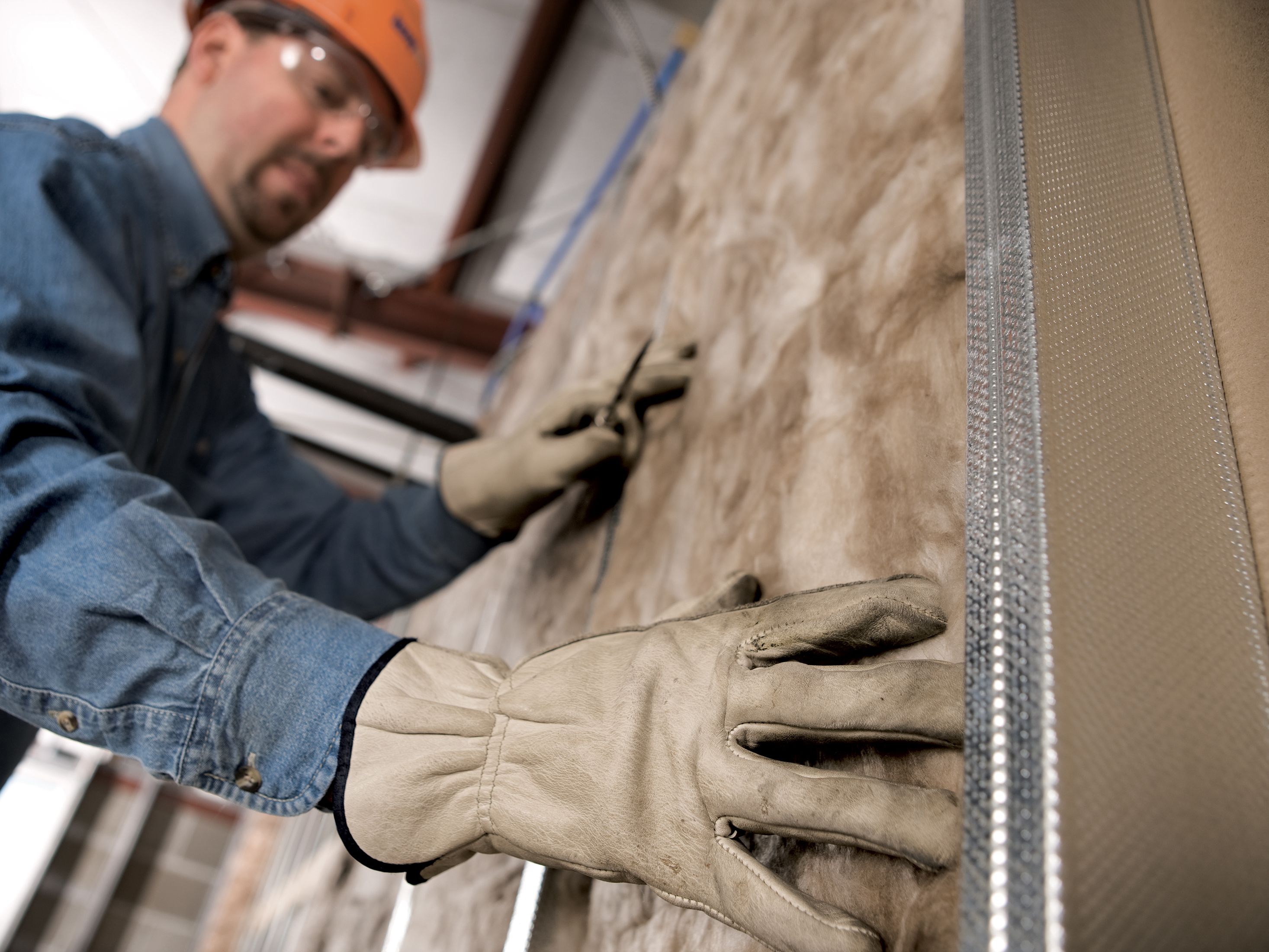
Unfaced insulation is held in place by a friction fit between studs, joists, or rafters in walls. Overhead applications that will be left exposed will require insulation supports. It can be added to existing insulation, whether faced or unfaced.
Common Uses:
- Attics
- Crawlspaces
- Interior walls
- Between floors
What is Faced Insulation?
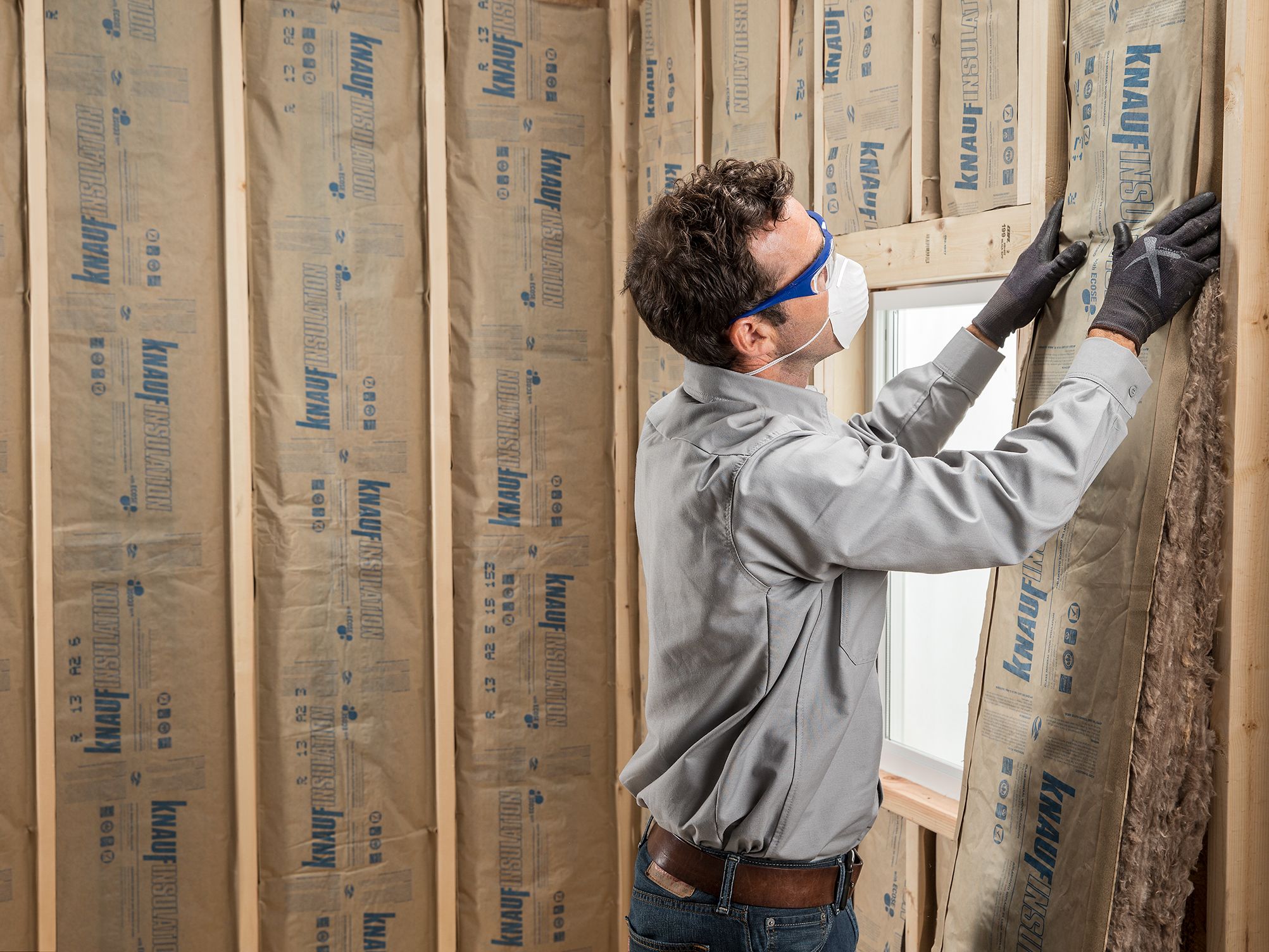
Kraft-faced insulation has an asphalt-backed kraft paper attached to one side of the insulation. The asphalt on the kraft paper acts as a vapor retarder which helps with moisture migration. Because kraft-faced insulation is paper-faced, it does not have a fire rating and should not be left exposed.
Installing Faced Insulation
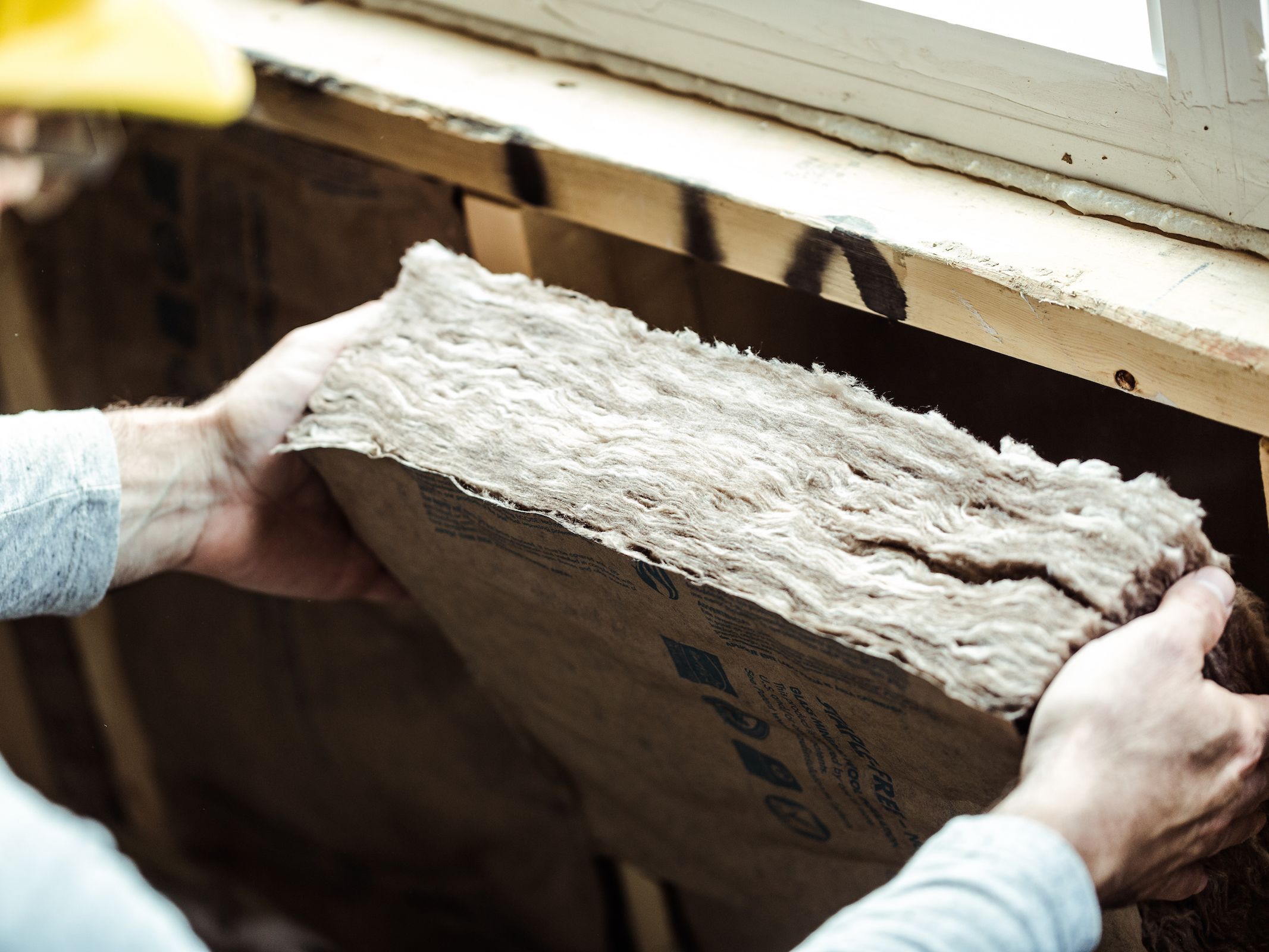
Kraft-faced batts come with staple tabs or staple-free. Tabbed batts have paper tabs that can be folded out to allow mechanical fasteners—typically staples—to secure the batt in place. You can also install batts that have staple tabs by friction fit as well without the need to staple. Staple-free batts do not have tabs and are installed by friction fit with no mechanical fasteners. When using faced insulation, the facing or paper will typically face the warm-in-winter side of the assembly. Consult your local codes for the use of a vapor retarder and the proper installed orientation.
It is not recommended to install insulation with a kraft facing over another. When installing layers of insulation, there should only be one vapor retarder installed in the appropriate location. It’s not good practice to incorporate two vapor retarders in an insulation system. Moisture could become trapped between the two layers and not be able to dry.
Common Uses:
- Exterior walls
- Attic ceilings
- First-time applications
Faced vs. Unfaced Insulation Comparison
| Fiberglass | vs. Cellulose |
|---|---|
| Not a vapor retarder | Vapor retarder |
| Can be left exposed | Behind drywall |
| Class A Fire Rating | Not fire rated |
| Held in place with friction fit | Tabbed or staple-free |
| Can be added to existing insulation | Not recommended to install insulation with a kraft facing over another |
Always Check Local Building Codes
Keep in mind location and climate are critical factors when determining your insulation needs. It is very important to always check your local code to see if you should (or shouldn’t) be using faced insulation.