


Improving Our Air Sealing IQ: How Controlled Airflow Enhances Every Building
05/21/2025
Did you know that up to 40% of a home's heating and cooling energy can be lost due to air leakage (source: Energy Star)? That’s like throwing money out the window—literally. Yet, misconceptions like “houses need to breathe” or “we’re building houses too tight” are causing confusion about why air sealing is critical.
If you take away just one thing from this discussion, let it be this: “If it’s not controlled, it’s uncontrolled.” This principle is the cornerstone of effective building performance. By embracing this mindset, you can avoid unintended consequences and deliver projects that provide comfort, enhanced health and safety, energy efficiency, and long-term durability.
Uncontrolled airflow undermines building performance, comfort, health, and efficiency. By improving your air sealing strategy, you can deliver better results—right from the start.
Why Air Sealing is Essential
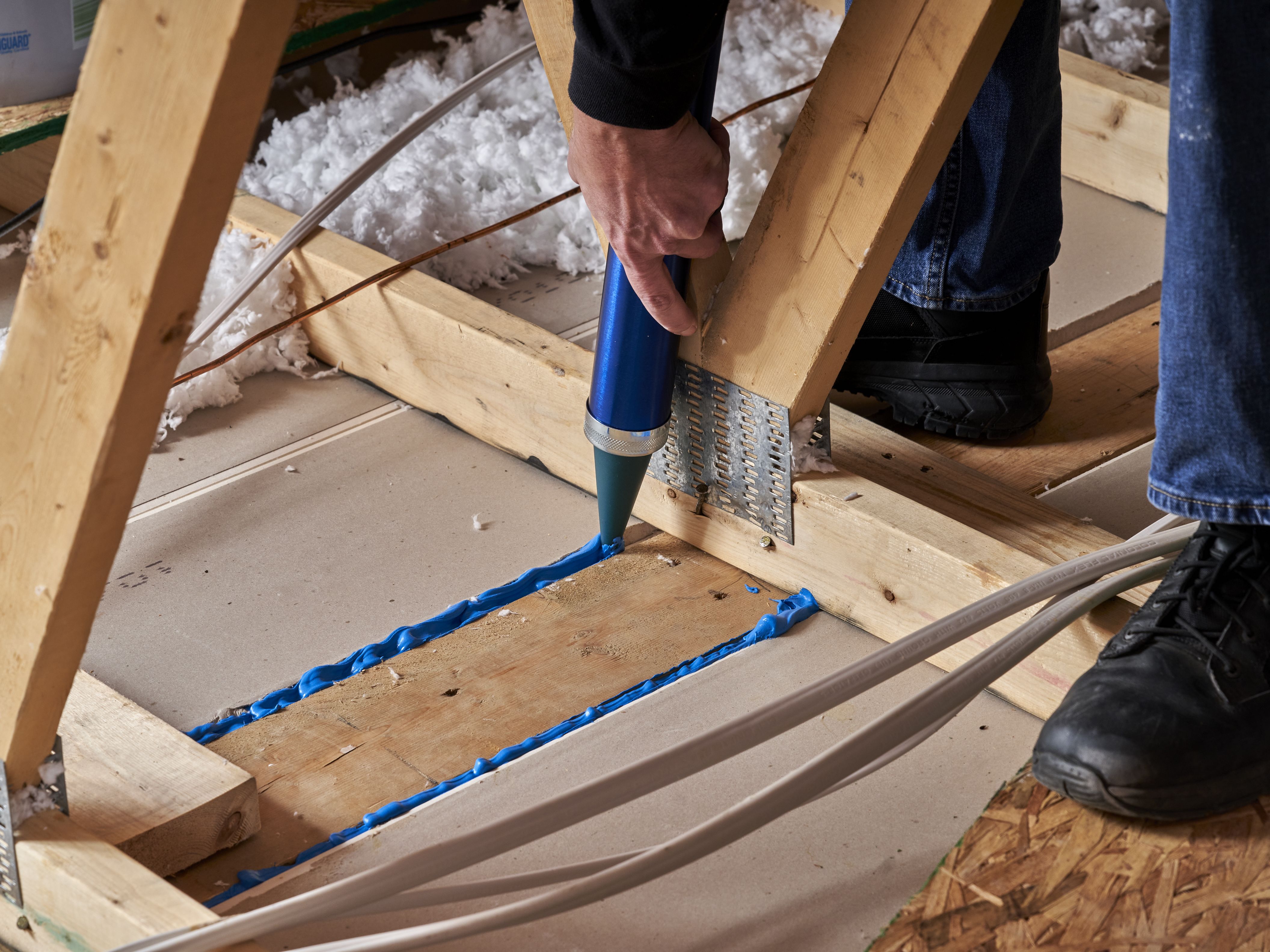
Air sealing isn’t just about saving energy—it’s about taking control of your building’s environment. Uncontrolled air leakage allows heat, air, and moisture to move unpredictably, leading to:
- Comfort Issues: Drafts, hot or cold spots, and temperature swings.
- Material Damage: Moisture infiltration can cause mold, rot, and structural problems.
- Higher Energy Costs: Leaky buildings waste energy, driving up utility bills.
- Health Concerns: Pollutants, allergens, and even carbon monoxide (CO) and radon can enter through unsealed gaps.
Whether you’re constructing a new building or retrofitting an existing one, air sealing is one of the most cost-effective and impactful steps you can take. Getting it right the first time ensures lasting benefits for the built environment.
The Science of Air Movement
Buildings are subject to pressure differences caused by wind, the stack effect (when warm air rises and escapes through the top of a building), and mechanical systems. Without proper air sealing, these forces drive air through gaps in foundations, walls, and ceilings, causing:
- Heat Transfer: Leaky buildings lose warm air in winter and gain it in summer, undermining energy efficiency and creating comfort concerns.
- Moisture Transport: Air carries moisture, and even small leaks can lead to hidden damage inside walls, floors, and ceilings. Over time, this can cause structural issues and health risks including mold growth.
- Pollutants: Unsealed cracks allow contaminants like dust, pollen, and even CO and radon to enter. These pollutants can compromise indoor air quality and pose serious health risks.
Common Consequences of Air Leakage
- Occupant Discomfort: Drafts, uneven temperatures, and excessive humidity or dryness can make spaces uncomfortable. For example, leaky homes are often drier in winter (causing static electricity) and clammy in summer due to humid outdoor air infiltrating.
- HVAC Inefficiency: Leaky buildings complicate HVAC sizing, often resulting in oversized systems that are costly to install, operate and maintain. Poorly sealed ducts can also pull contaminants into the system, spreading them throughout the building.
- Energy Loss: Air leakage can account for up to 40% of heating and cooling energy use (Energy Star). Even with high-quality insulation, poor air sealing can lead to higher energy bills and reduced comfort.
- Moisture Damage: Moist air entering building cavities can condense, leading to mold, rot and structural issues. Certain pests, like termites and dust mites, thrive in these moist environments.
- Indoor Air Quality (IAQ) Problems: Infiltration introduces allergens, pollutants, and even combustion gases from attached garages or fossil fuel appliances. This is why CO detectors are essential, even in all-electric homes.
The Four Control Layers in Building Assemblies
| Control Layer | Function | Common Materials |
|---|---|---|
| Air Barrier | Limits air flow between conditioned and unconditioned spaces | Fluid applied & self-adhered membranes, mechanically fastened wraps, insulating boards, factory-bonded sheathing, sealants, tapes, spray foam |
| Thermal Barrier | Slows flow of heat energy movement | Fiberglass, rock mineral wool, cellulose, and foam board, spray foam, wood fiber insulation |
| Vapor Control Layer | Controls moisture diffusion, allows drying in the proper direction | Kraft faced insulation, foil, polyethylene, vapor-retardant paints, intelligent membranes, some insulation boards |
| Water Resistant Barrier | Prevents bulk water entry into the structure | House wraps, liquid-applied membranes, self-adhered flashing membrane, building paper, sheet applied membranes |
Each layer plays a critical role in the building assembly. If one layer fails, it can compromise the others, leading to performance issues and potential damage.
Air Barriers ≠ Thermal Barriers
One common misunderstanding is the interchangeable use of "air barrier" and "thermal barrier." These are distinct components with unique purposes:
- Thermal Barrier: Insulation is designed to reduce heat transfer (measured by R-value or U-factor). Increasing R-value improves energy efficiency.
- Air Barrier: Air sealants control air leakage (measured by Air Changes per Hour, or ACH). Reducing ACH makes a building tighter and more efficient.
Both are essential for optimal performance. Research from the Thermal Metric Summary Report (Building Science Corporation, 2013) found:
- Walls with the same R-value and proper air sealing perform equally well, regardless of insulation type.
- Air movement through assemblies reduces thermal performance, regardless of insulation material.
In short, R-value is R-value, and ACH is ACH. Both must work together to deliver the expected performance.
Air Sealing Takeaways
- Air sealing is essential for energy efficiency, comfort, and health.
- Uncontrolled air leakage leads to moisture damage, poor indoor air quality, and higher energy costs.
- The four control layers—air, thermal, vapor, and water-resistant barriers—must work together for optimal building performance.
- Air barriers and thermal barriers are distinct but complementary. Both are necessary for achieving high-performance buildings.
Remember “if it’s not controlled, it is uncontrolled.” This applies to heat, air, moisture, and indoor air quality. Air sealing is one of the smartest ways to improve every one of these important building performance factors.