


Understanding EPDs: A Transparent Path to More Sustainable Buildings

03/25/2025
Understanding the impact of the products we use allows people to make informed choices. With every construction project, it is important for designers and builders to feel confident that their product choices consider environmental impacts to create comfortable homes and buildings.
This is where Environmental Product Declarations (EPDs) come into play.
Read on to discover what EPDs are, why they matter, and how Knauf is on the path to making their products more transparent.
What is an EPD?
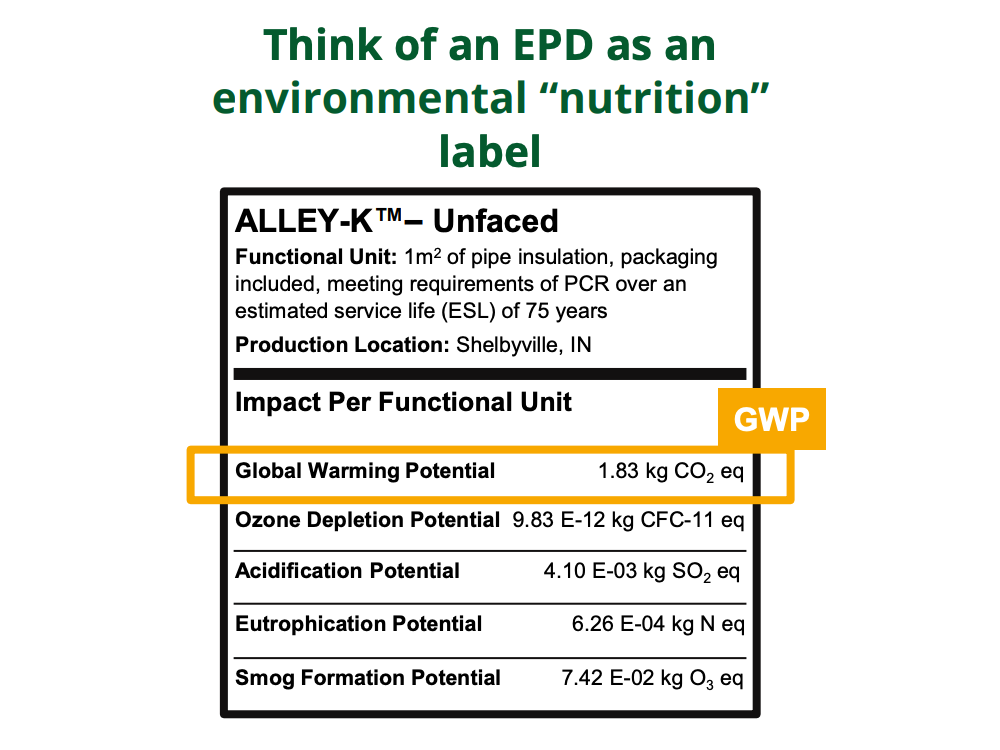 An Environmental Product Declaration is a comprehensive, standardized document that reports how a product impacts the environment throughout its lifecycle—from every ingredient needed to create the product to its disposal.
An EPD includes information about a product’s impact on climate (global warming and ozone depletion potential), water and soil impact (eutrophication and acidification potential), air quality (smog formation potential), and more.
The most popular category is the global warming potential (GWP). This value is often used to report a product’s carbon footprint.
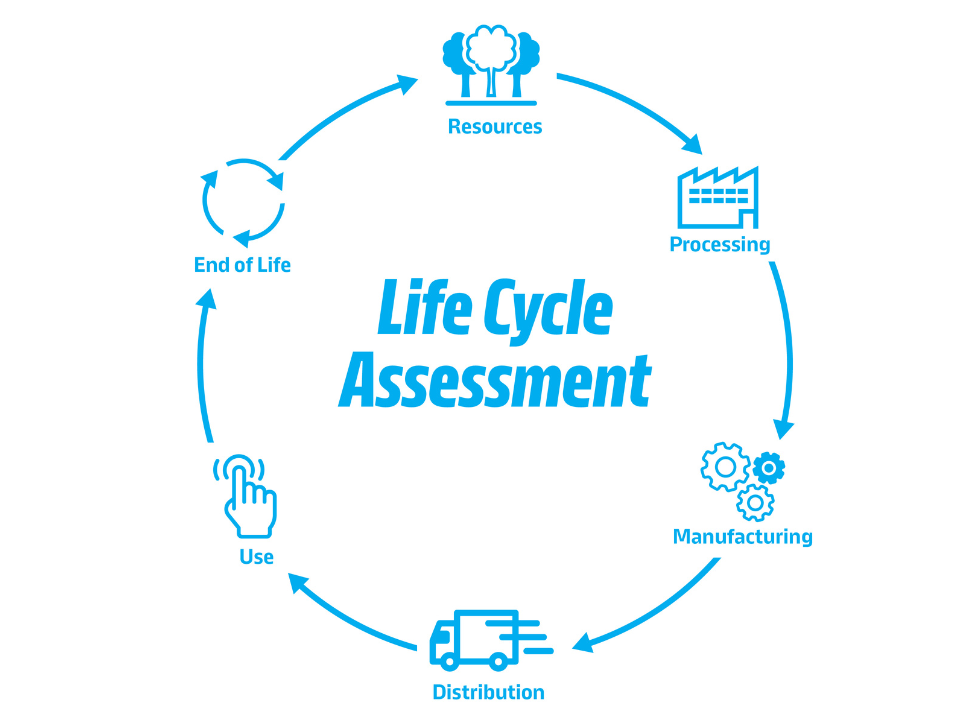
At the core of any EPD is a Life Cycle Assessment (LCA). A LCA is a detailed evaluation of the environmental impact of a product from raw material extraction to end-of-life.
Each product-specific EPD follows a Product Category Rule (PCR) to drive consistency among EPDs of a product type. Think of the PCR as the rule book, the LCA as the calculation, and the EPD, the report of results.
Who benefits from using EPDs?
EPDs deliver value to a range of stakeholders, especially within the construction industry.
- Architects and Designers: Gain clear insights into a product’s sustainability attributes, enabling informed design decisions.
- Specifiers and Builders: Make better material choices that align with project sustainability goals.
- Building and Home Occupants: Feel confident knowing their spaces are constructed with environmentally transparent products.
By offering science-backed data, EPDs empower professionals to understand the environmental impact of the buildings they create.
Why are EPDs important?
It is important for companies to be clear about their practices and the products.
- Building Certifications: Professionals can better align with building certifications such as LEED, LBC, and WELL.
- Disclosure: EPDs offer clear and comprehensive insights into a product’s environmental impact.
- Differentiation: Companies embracing EPDs set themselves apart and drive innovation.
Product Transparency at Knauf
Knauf is dedicated to creating EPDs for all our products. Currently, all Knauf’s EPDs are product-specific, site-specific and third party verified. Knauf’s focus on EPDs is not just something we have to do. It is about building trust and leading the way in product transparency. As we continue to develop EPDs for all our products, we remain committed to helping our customers make informed, sustainable choices.
Discover Knauf’s EPDs and see how we can support your next sustainable project at https://transparencycatalog.com/company/knauf-insulation.
Find more information on EPDs from the EPA at https://www.epa.gov/system/files/documents/2024-11/epd_basics_how_why_to_develop.pdf.