


6 Ways to Lower Your Carbon Footprint

04/18/2022
The warmest seven years on record have all been since 2015 — and global temperatures are only expected to rise further. This is partly due to increased carbon emissions (CO2) from the fossil fuels that are used to provide energy for buildings, vehicles, and manufacturing.
In order to reduce our emissions most effectively, we need to better understand where they come from. Transportation (28%) and Home Energy Use (27%) are the biggest contributors to individual climate change.
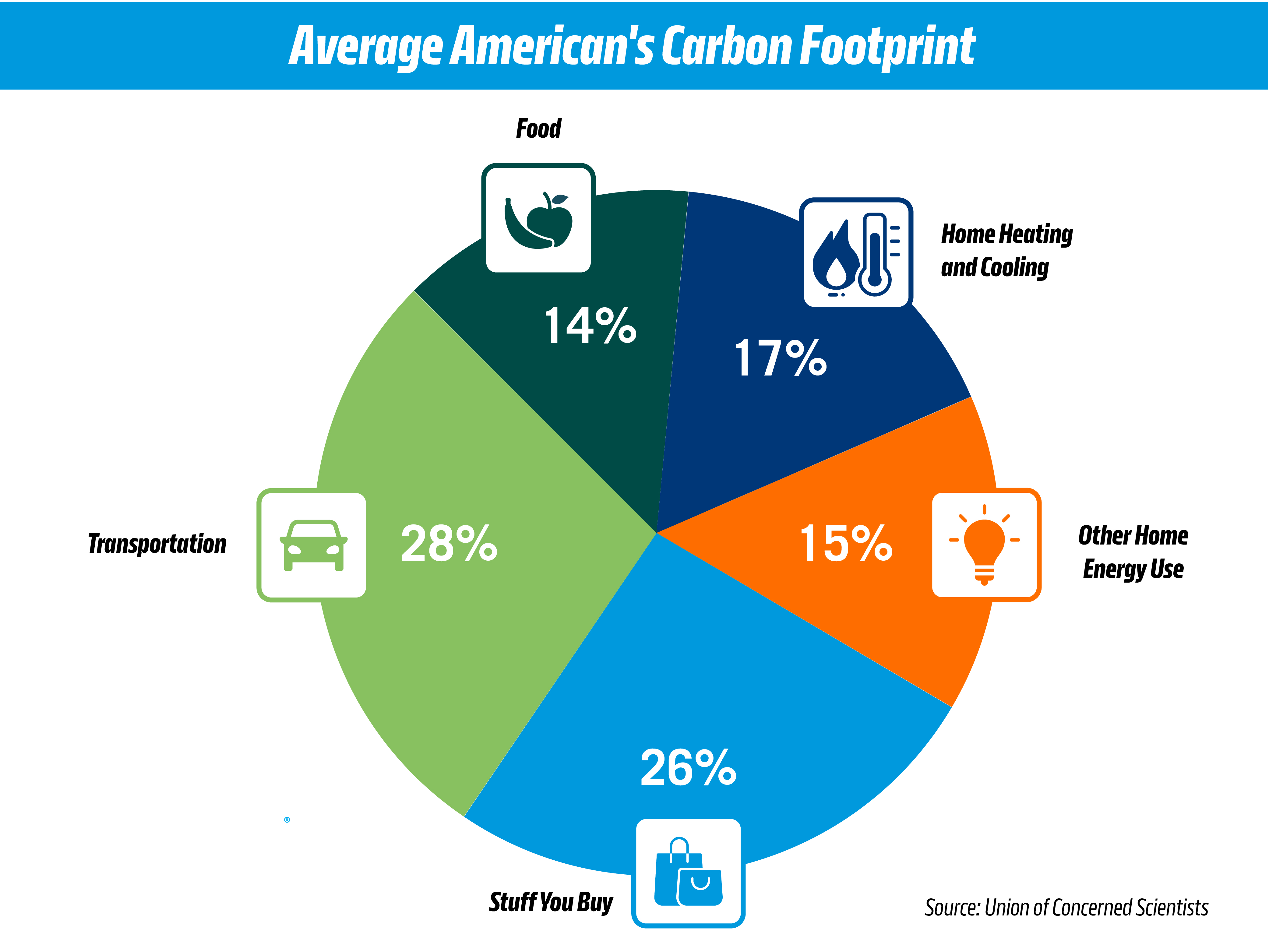
The average carbon footprint (the total greenhouse gas emissions caused by an individual) for a person in the United States is 16 tons, one of the highest rates in the world. Globally, the average carbon footprint is closer to 4 tons. (Calculate your individual carbon footprint and understand the impact you can make.)
Here are 6 ways you can lower your carbon footprint — starting today.
1. Travel more efficiently
Transportation is the biggest carbon contributor in the U.S. While living a car-free lifestyle may not be possible for everyone, try substituting car trips with bike rides, bus trips, train rides, or other forms of public transportation. Check your tire pressure for better fuel economy, carpool when possible, and consider purchasing a hybrid or electric vehicle when shopping for a new car.
2. Plant shrubs and trees around your house
Deforestation is one of the significant causes of carbon emissions as trees absorb and store the carbon dioxide from the atmosphere. Planting trees and shrubs is among the most inexpensive ways to take climate action and reduce your negative environmental impact.
3. Eat in-season, locally-produced food
An estimated 13 percent of U.S. greenhouse gas emissions result from the production and transport of food. Transporting food whether by truck, ship, rail, or plane, uses fossil fuels to keep foods from spoiling during transit. Eating locally supports your community and cuts down on emissions.
4. Reduce, reuse, and recycle
Recycling saves energy. That's because making goods from recycled materials typically requires less energy than making goods from raw materials. Recycling also means less waste going to landfill, which means less methane generated. Knauf uses 500 million pounds of recycled glass in its manufacturing every year — and we’d use more if it was available. Even though glass is one of the most recyclable materials, only 31 percent of glass is recycled in the U.S. Compare that to a 76 percent glass recycling rate in the EU, there is a lot of room for improvement.
5. Avoid fast fashion
Trendy, cheap items that go out of style quickly get dumped in landfills where they produce methane as they decompose. The average American discards about 80 pounds of clothing each year, most of which ends up in landfills. In addition, most fast fashion comes from China and Bangladesh, so shipping it to the U.S. requires the use of fossil fuels. Instead, buy quality clothing that will last, or even better, buy at a consignment shop.
6. Make energy-efficient home improvements
Buildings — including homes, offices, and stores — use around 40 percent of global energy and emit more than a third of the world’s emissions. Making energy-efficient upgrades such as using LED lighting, using a programmable thermostat, sealing air leaks, and adding fiberglass insulation. Not only do these energy-efficient home upgrades save energy and reduce carbon emissions, they save money on heating and cooling, too. The best way to start is with a home energy audit performed by a building energy expert.
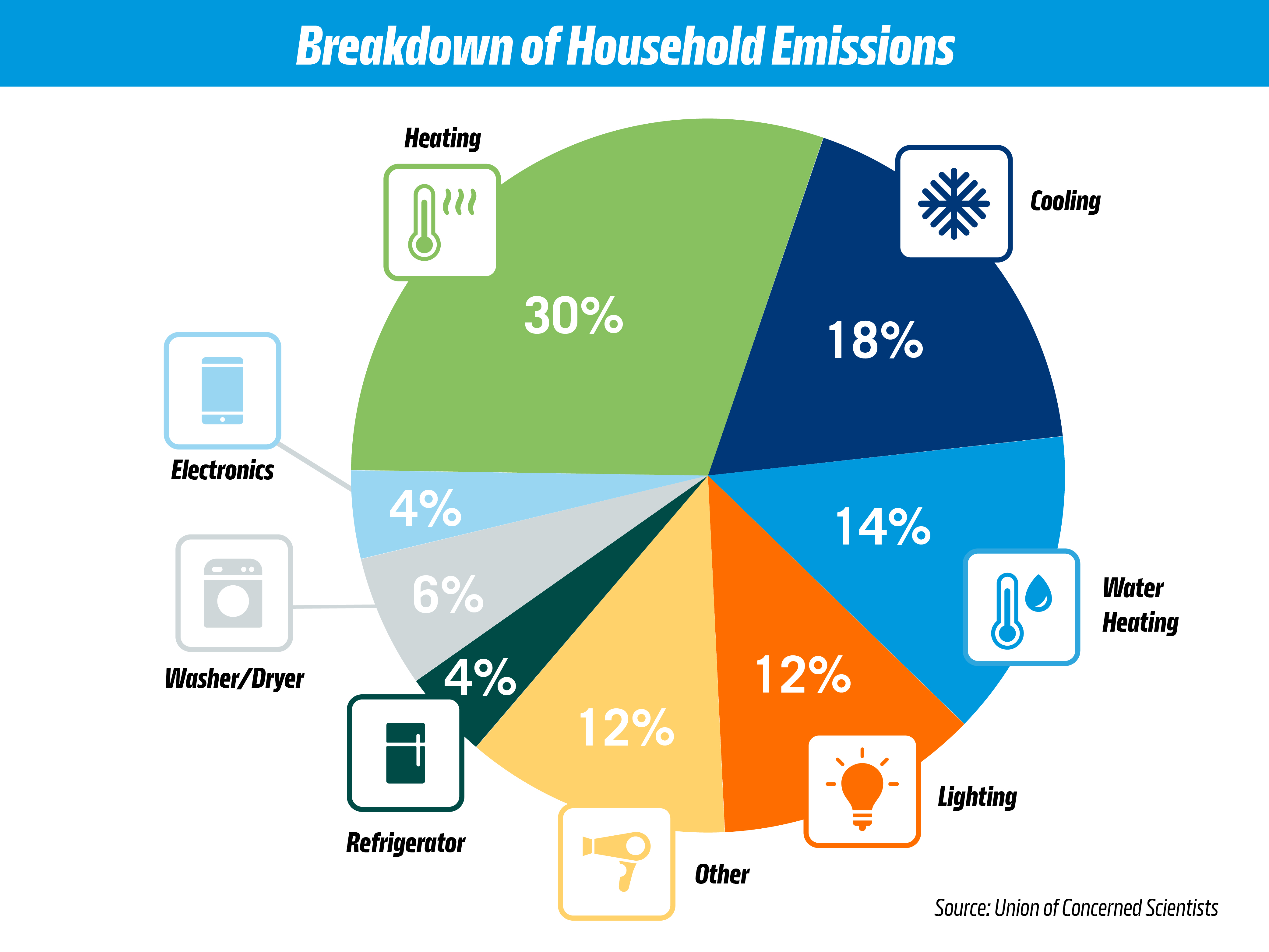
Knauf Insulation is committed to sustainability. Our products start with recycled content, reduce energy consumption during manufacturing, and end with a sustainable product that takes just 40 days to recover the energy used to make, ship, and install it. Then keeps on saving for the life of the insulation.
Every day, our products are actively reducing energy use in millions of homes, schools, and workplaces across the world. Learn more about how we’re committed to reducing emissions, saving energy, and creating better buildings for the benefit of people and the planet.